
Mold Removal Gainesville, FL
Mold removal services in Gainesville, FL for homeowners and businesses, including professional inspections and remediation across High Springs, Alachua, and all of Alachua County.
WRITTEN SCOPE BEFORE WORK
serving in north florida
SERVING GAINESVILLE & ALACHUA COUNTY
What is the average cost to remove mold?
Mold removal costs in Gainesville depend on how much material is affected, access to the area, and the repairs needed to fix the moisture source. A small patch under a sink is a different job from mold inside walls or an AC system.
Ask for a written scope and an itemized quote before work starts, including any separate charges for testing, moisture repairs or rebuilding.
Gainesville’s Humidity Doesn’t Wait. Neither Should You.
Gainesville summers run long, hot, and stifling humid, and that’s exactly the environment mold and bacteria need to take hold. Even a well-kept, clean home can develop hidden colonies without warning — usually tucked into the parts of the house nobody checks: behind walls, inside ductwork, under flooring. Left unaddressed, that growth can meaningfully affect your home’s indoor air quality.
Relative humidity in Alachua County stays high most of the year and climbs even higher during summer storm season. Once indoor humidity sits above 60% for about 48 hours, mold spores stop being dormant and start actively growing — no flood required.
Why Gainesville homes are especially mold-prone
We inspect for the real, local causes — not just what’s visible on the surface.
Why Gainesville Homeowners Trust Us
From same-week scheduling to fair, transparent pricing, here’s what homeowners can count on when they call us first. Learn more about how we work.
What to Expect From Professional Mold Remediation
The moisture source comes first
Mold returns when the water problem is left in place, so the job starts by finding where the moisture is coming from.
Scope and price in writing
The affected areas, planned work and price are provided in writing before remediation starts.
Documentation for the job
Job records appropriate to the project, such as moisture readings and photos, so you know what was found and what was done.
Mold Inspections & Remediation Services in Gainesville, FL
From attic to crawl space, our mold removal services in Gainesville treat the specific way mold shows up in Alachua County homes — not a one-size-fits-all checklist.
Where We Find Mold Most
- Attics: Poor ventilation and roof leaks trap heat and humidity right under the roofline — one of the most common spots we find active mold in Gainesville homes.
- Bathrooms: Weak or missing exhaust ventilation lets shower and bath humidity linger on walls, ceilings, and grout.
- Crawl Spaces: Ground moisture and poor airflow underneath the home create a near-constant humid environment, especially in older construction.
- AC & HVAC Systems: Clogged condensate drains and undersized units struggle to dehumidify Florida air, letting mold grow inside ductwork before it is ever visible.
- Under Sinks & Plumbing Areas: Slow leaks around pipes and fixtures go unnoticed for weeks, feeding mold behind cabinets and under flooring.
- Windows & Window Sills: Condensation from single-pane or aging windows collects on sills and frames, especially in older Gainesville homes.
Services at a Glance
Explore each service in detail: mold testing and inspection in Gainesville, black mold removal, attic mold removal, crawl space mold removal, AC and HVAC mold removal, bathroom mold removal, water damage and mold restoration, commercial mold removal, and historic home mold removal for Gainesville’s older properties. Helpful guides: types of mold found in Gainesville homes, mold in UF student rentals, landlord mold responsibility in Florida, and mold after a hurricane or storm. Florida AC systems get their own guide too: mold in AC units and ductwork.
Real Mold Removal Cases in Gainesville
A look at how common mold problems show up in Gainesville homes — and how they get resolved.
The Hidden AC Leak — Haile Plantation
A homeowner noticed a musty smell but no visible mold. Inspection found condensation from an oversized AC unit had been feeding mold growth inside a closet wall for months. Contained and removed in under 3 days, with the AC drainage issue flagged for repair to prevent recurrence.
Post-Storm Attic Mold — Duckpond Historic District
After a roof leak during Florida’s rainy season, mold spread through attic insulation in a century-old home. Because of the historic construction, removal required extra care to preserve original materials — treated using NORMI-standard containment without disturbing the home’s original woodwork.
Student Rental Turnover — Near UF Campus
A landlord preparing a rental between semesters found black mold in a bathroom with poor ventilation. A same-week inspection and remediation got the unit turned around before the new semester’s move-in date, avoiding a costly vacancy.
What Makes Us Different
When it comes to mold removal in Gainesville, not all services are created equal. Here’s why homeowners and businesses throughout the area trust us to get the job done right:
1. Local Gainesville Experts
We understand the unique climate conditions in North Florida that make mold growth a persistent problem.
2. Fast Response Times
Mold doesn’t wait, and neither do we. We offer prompt scheduling so your mold problem is addressed before it spreads and causes further damage.
3. Certified & Experienced Professionals
Every technician on our team is fully certified and trained in the latest mold removal techniques
How We Do It
At Mold Removal Gainesville, our process follows NORMI’s detailed step-by-step guide for safe, effective mold removal, with additional steps built in specifically to address mycotoxins — the toxic byproducts mold leaves behind even after the visible growth is gone. NORMI has trained mold professionals since 2004 and is an approved training and exam provider for Florida’s mold assessor and remediator licenses, so the standards we follow aren’t something we made up — they’re built on IICRC S-520, the industry’s benchmark for mold evaluation and removal.
The key is to Contain, Remove, and Sanitize.
Contain
Mold is a living organism — it breathes, feeds, reproduces, and produces waste. Before any work starts, we make sure you and your home are protected from exposure or cross-contamination. Depending on the type and source of the mold, that often means setting up a negative air containment system to keep the affected area sealed off, stop spores from spreading through the rest of the house, and protect everyone inside from the mycotoxins mold leaves behind.
Remove
“When in doubt, rip it out” is the phrase most people hear about mold removal, and while it’s not wrong, it’s incomplete. What actually needs to come out depends on the extent of the problem, the type of mold, and the level of exposure. In plenty of cases — especially with the more aggressive, water-loving mold species — some building materials do need to be removed to stop a colony from spreading further, since mold is literally feeding on the organic materials used to build your home. This is why we hold every job to NORMI’s removal standards rather than guessing at what needs to go.
Sanitize
Once the area is contained and any compromised materials are out, it’s time to sanitize. We use a hospital-grade Hypochlorous Acid solution — the same category of product highly regarded for eliminating both mold and mycotoxins without relying on harsh chemicals. It’s effective and gentle enough to use throughout an occupied home.
Clear Scope, Pricing and Documentation
You should know what is being done, why it is needed and what it will cost before work begins.
Written scope first
The affected areas, planned work and price are provided in writing before remediation starts.
Moisture findings
We document relevant conditions and moisture readings so the source of the problem is not overlooked.
Project records
Photos, work records and available testing reports can support insurance, rental and property-sale files.
Independent verification
When formal assessment or clearance testing is appropriate, it is handled by an independent Florida mold assessor.
What Happens When You Call
From the first phone call to the finished job, here is how it works.
- 1
Call or ask a question
Call (386) 378-7980 and tell us what you’re seeing, whether that’s a smell, a stain, or a past leak. Not ready to book? Ask your question first.
- 2
We set a time
Most calls in and around Gainesville get a same-day response. More rural parts of Alachua County are typically next-day.
- 3
Free inspection
We look at the affected area and check moisture levels to find where the water is coming from. The inspection is free.
- 4
Testing, only if it helps
If a lab test would change your decision, it goes through an independent, licensed assessor. That is how Florida keeps mold testing and removal separate.
- 5
Written estimate first
You get the scope and price in writing before any work starts. We give you a real number after the inspection, not a guess over the phone.
- 6
The work, then the records
We contain the area, remove what’s affected, and sanitize. We document conditions, moisture readings, and the work performed.
What Affects the Cost of Mold Removal?
We don’t quote over the phone because no two jobs are alike. After a free inspection you get a real number in writing. Here is what moves it.
Area affected
A patch around one vent is a different job from mold across a whole attic deck.
How far it spread
Hidden growth behind walls, under flooring, or inside ductwork adds work.
Materials involved
Colonized drywall, insulation, and wood often have to come out. How much depends on the damage.
Access
How easy the area is to reach, especially in attics and crawl spaces.
The moisture source
A leak or drain problem that is hard to reach or fix adds to the job. Mold comes back if the water does.
Containment and drying
Containment, air filtration, and drying time depend on the size and location of the job.
Testing
Only when it will help, such as for a home sale, a claim, or hidden mold. It is done by an independent, licensed assessor.
Water damage or AC involvement
Mold that followed a leak, or reached the AC system, is a bigger job than a spot behind one section of drywall.
Free inspection. Free written estimate. Scope and price in writing before work starts.
Insurance Claims: What We Document
Whether insurance pays depends on your policy and what caused the mold, and your insurer makes that call. What we can do is document the job so you have facts to give your adjuster. Depending on the job, that can include:
- Conditions found: what was affected and where
- Moisture readings
- Scope of work, written before work starts
- Timeline of the problem and the work
- A record of the work performed
- Testing reports, when testing was done, from the independent assessor
The same records help with a home sale or a rental turnover. We can also help you understand what your policy covers before you file.
Tip: if water got in, take your own photos and video before anything is moved. Our water damage page lists the first steps.
DIY vs. Professional Mold Removal: Which Is Right for You?
A small, contained spot of mold on a hard, non-porous surface can often be handled with soap and water. But most of the mold cases we see in Gainesville homes go deeper than that — and DIY methods that only treat the surface tend to let it come right back.
| DIY | Professional | |
|---|---|---|
| Removes visible surface mold | ✅ | ✅ |
| Finds mold hidden behind walls, floors, or HVAC | ❌ | ✅ |
| Identifies and fixes the moisture source | ❌ | ✅ |
| Contains spores so they don’t spread to other rooms | ❌ | ✅ |
| Kills mold at the root (not just the surface stain) | Rarely | ✅ |
| Reduces risk of regrowth | Rarely | ✅ |
Why Bleach Alone Doesn’t Solve It
Bleach can lighten a mold stain and make it look gone, but mold grows roots into porous materials like drywall and wood that bleach can’t reach. Because bleach is mostly water, it can actually add moisture that helps mold come back on the surface — often within weeks.
When is DIY mold cleanup okay?
Only for small, contained spots on hard, non-porous surfaces like tile, glass, or sealed plastic — and only if there’s no ongoing moisture problem behind it. Anything on drywall, wood, insulation, or carpet, or any area larger than a dinner plate, is a job for a professional.
When should I call a professional instead?
Call a professional if the mold keeps coming back after cleaning, covers a large area, sits on a porous material, is linked to a past leak or water damage, or if anyone in the home is noticing symptoms like headaches, coughing, or congestion that ease up when they leave the house.
Real Mold Problems We’ve Solved
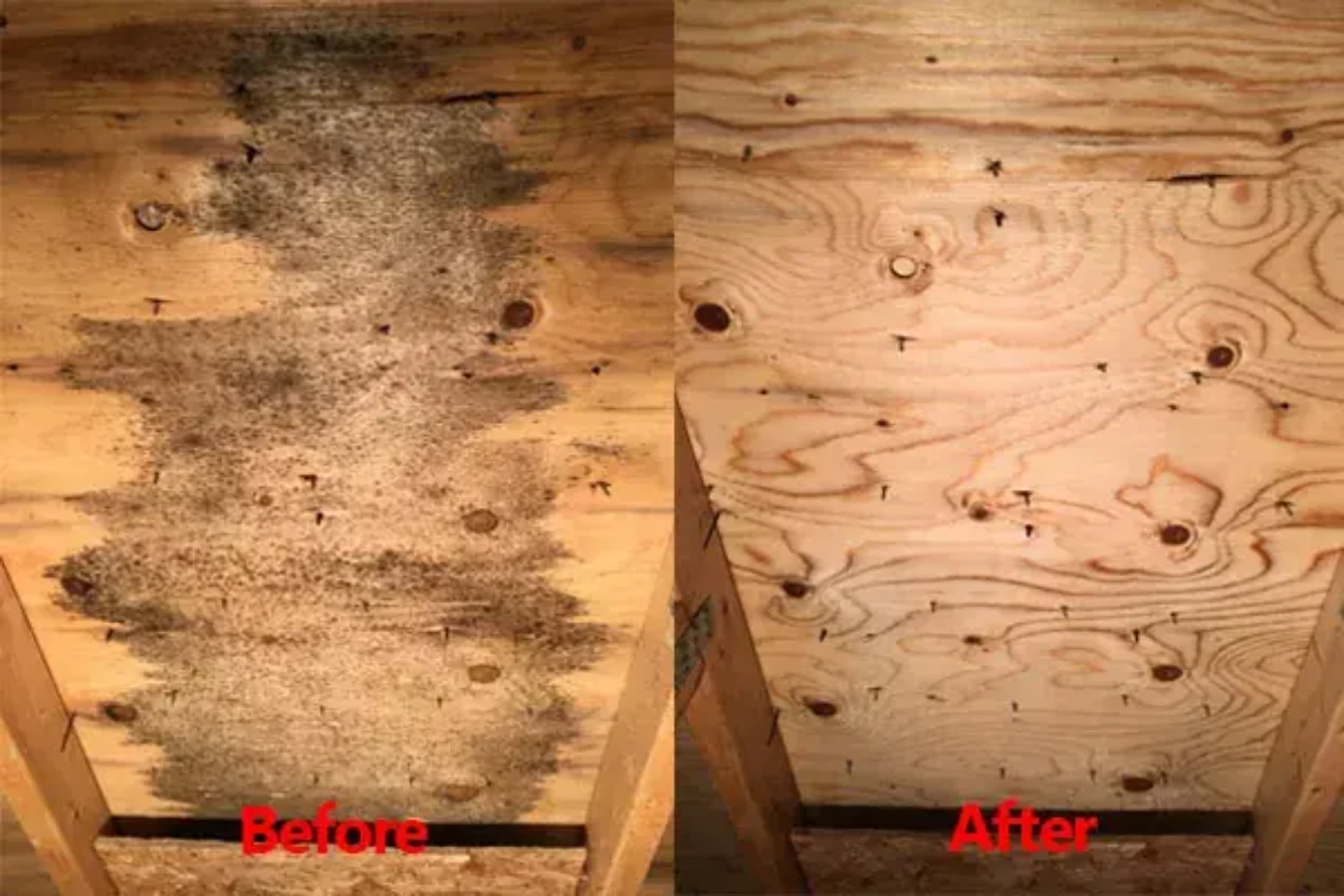
We don’t just remove what you can see — we find what’s causing it. Here’s what our inspections have caught around Gainesville:
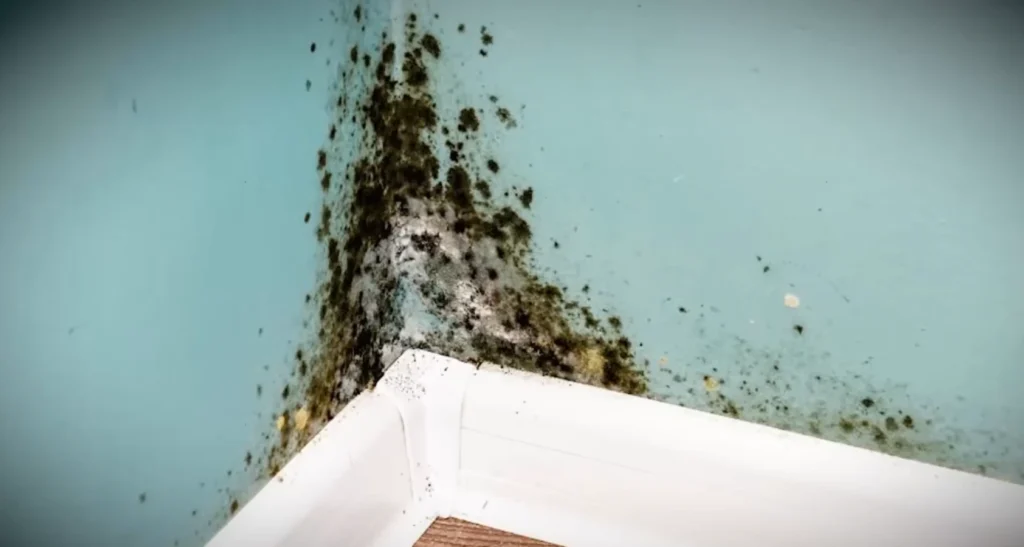
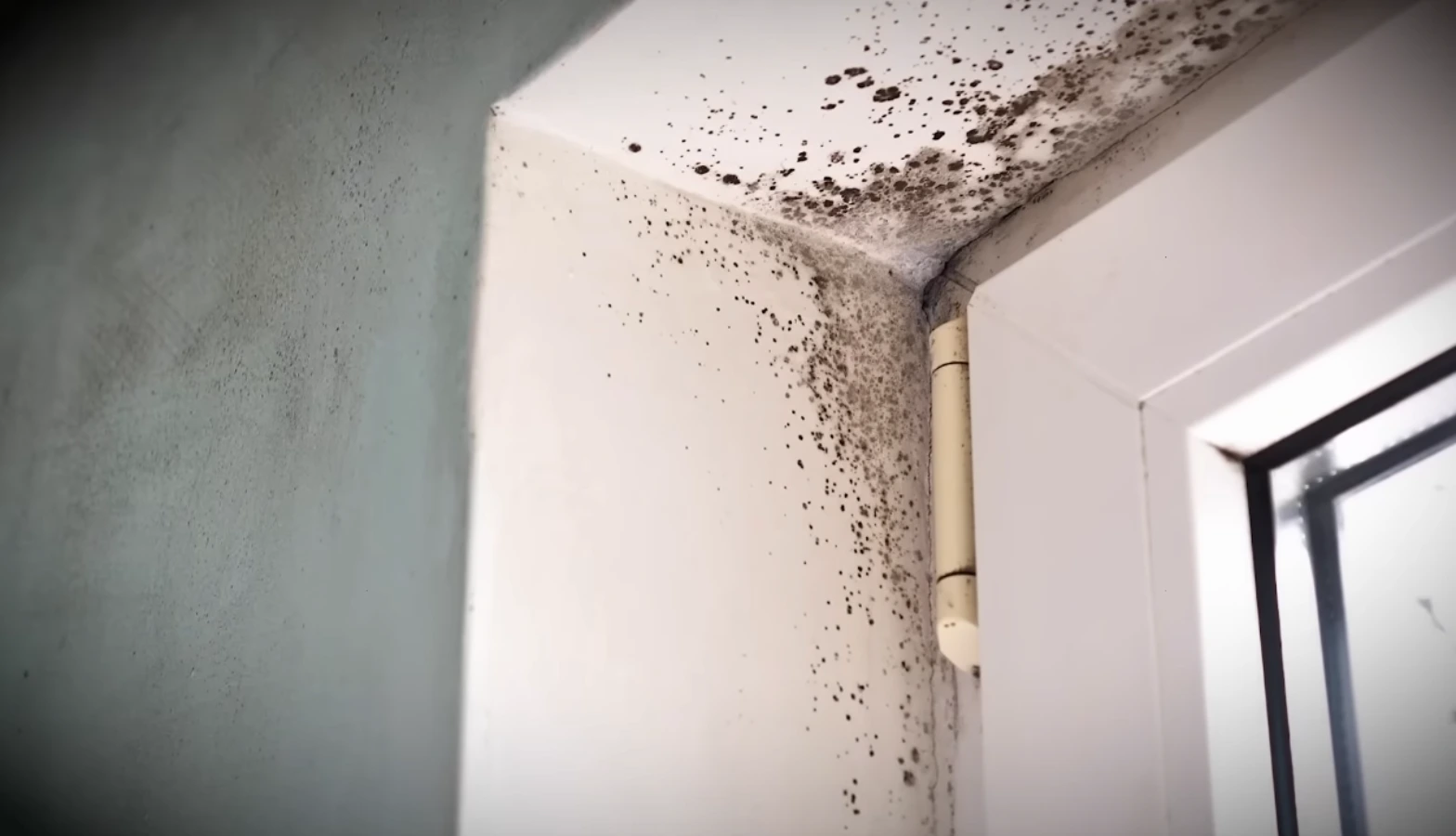
 Mold Found during inspection
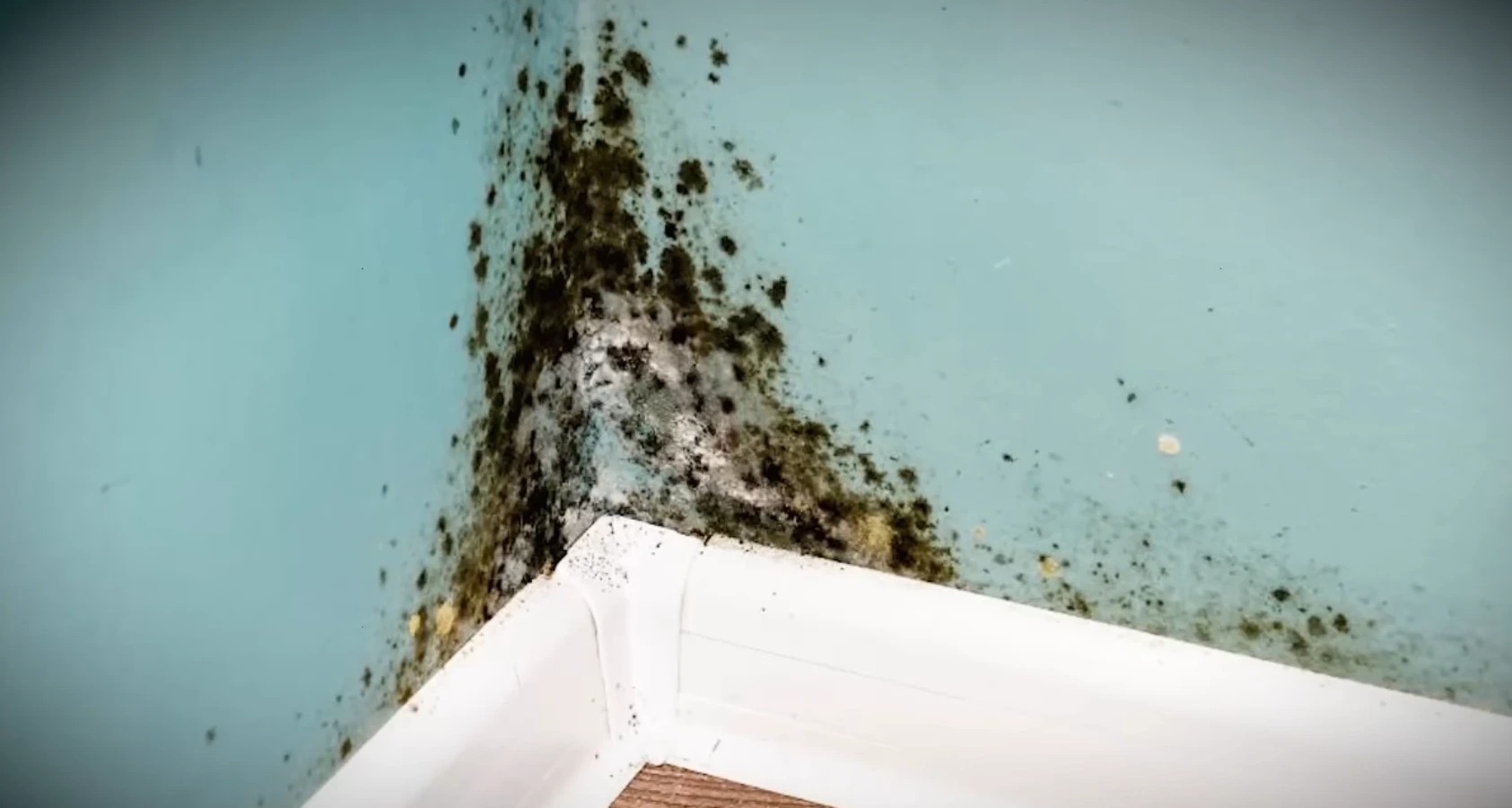
 Mold found in corner- removed and treated
 Mold found in corner of wall- during mold removal in Gainesville FL
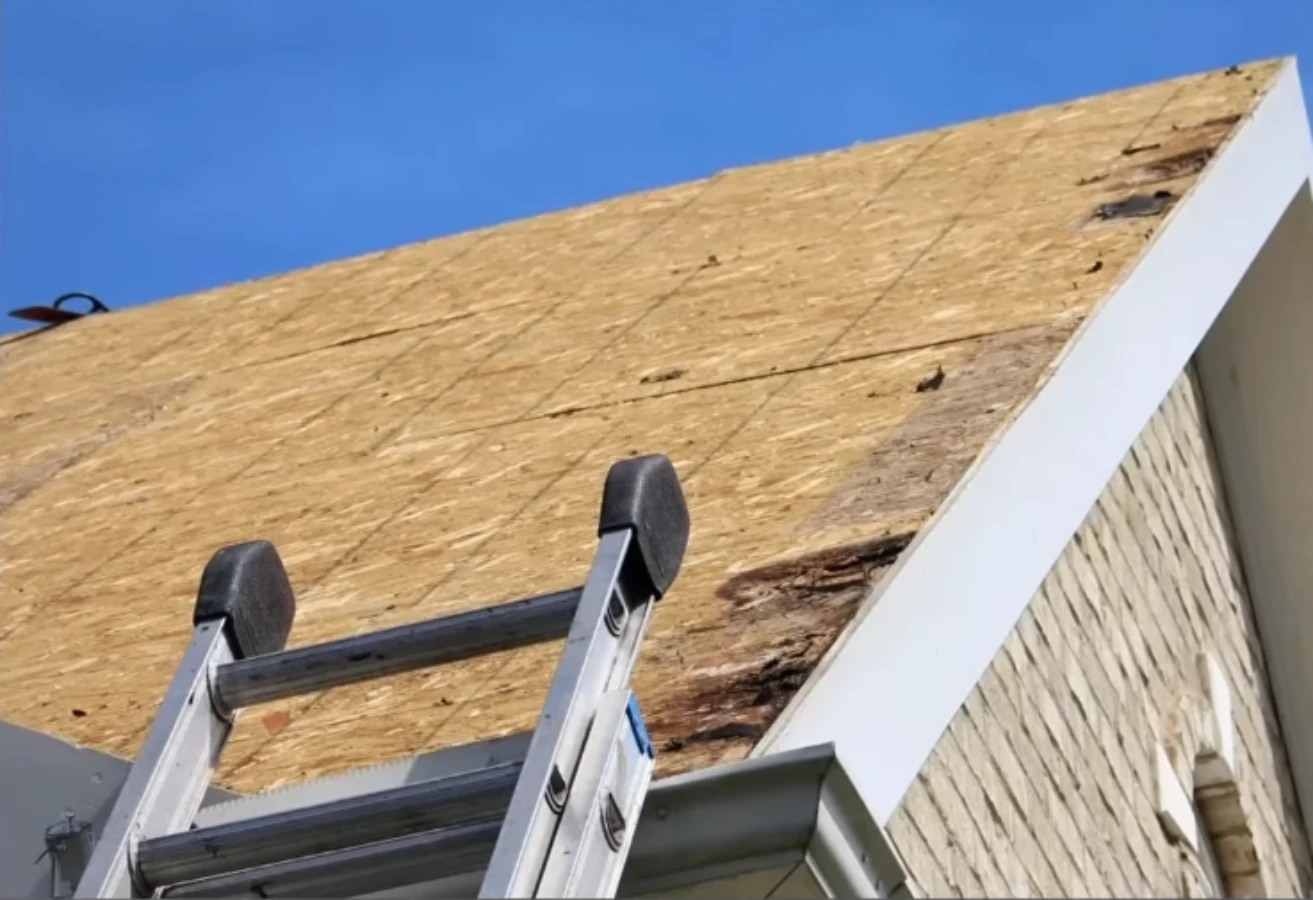
 Mold found in Attic- removed and treated
Our Mold Removal Services
- Water damage restoration & mold removal — Leak or flood damage and the mold it caused, handled as one job instead of two separate bills.
- AC and HVAC mold removal — Mold grows inside ductwork before you ever see it. We clean it out and fix the moisture problem causing it, not just the smell.
- Attic mold removal — Roof leaks and bad ventilation trap heat and humidity right under the roofline. We find it, remove it, and check what let it in.
- Crawl space mold removal — Ground moisture and poor airflow underneath the house create a near-constant humid environment, especially in older builds. We clear it and identify the source.
- Bathroom mold removal — If your bathroom fan isn’t pulling its weight, shower humidity sits on the walls and grout until it turns into mold. We treat it and tell you if the ventilation needs fixing too.
- Black mold removal — More aggressive species need full containment so spores don’t spread through the rest of the house while we work.
- Commercial mold removal — For offices, rentals, and businesses — remediation scheduled around your operations, with documentation for insurance or tenants.
- Historic home mold removal — Pre-1960s homes have original plumbing, single-pane windows, and crawl spaces that were never vented — all of it trapping moisture behind plaster and heart-pine walls. We work with that, not against it.
Areas We Serve in Alachua County
Mold Risk Factors We Track Across Alachua County
Mold doesn’t behave the same way in every Gainesville neighborhood. The age of the home, the soil, the tree canopy, and how close a property sits to Paynes Prairie or the Hogtown Creek watershed all change how fast moisture builds up indoors. Here’s what we watch for, block by block:
- Historic Duckpond & downtown homes (pre-1960s): original single-pane windows, older plumbing, and un-vented crawl spaces trap humidity behind plaster and heart-pine walls.
- Haile Plantation & Tioga (newer construction): tighter building envelopes hold in moisture from AC condensation and short-cycling units — mold shows up in ductwork before it’s ever visible on a wall.
- UF-area rentals & student housing (Midtown, campus-adjacent): high tenant turnover, inconsistent AC maintenance between leases, and bathrooms with poor ventilation.
- Near-creek & low-lying properties (Hogtown Creek corridor, areas near Paynes Prairie): higher water tables and slower ground drainage after Florida’s June–September rainy season.
- Rural Alachua County properties (Archer, Micanopy, Hawthorne): well water systems and septic proximity add moisture sources municipal-water homes don’t deal with.
Alachua County sits in a humid subtropical climate zone, where relative humidity averages well above 60% most of the year — the threshold at which dormant mold spores start actively growing. Add in roughly 55 inches of annual rainfall and a hurricane season that runs June through November, and it’s clear why Gainesville homes need a mold plan built around local conditions, not a generic checklist.
Proudly Serving Gainesville, FL & Alachua County
Serving Gainesville, Alachua, and communities across Alachua County, you typically get a response the same day you call.
Service Area & Response Times
| City / Neighborhood | Distance from Gainesville | Typical Response Time | Common Local Mold Cause |
|---|---|---|---|
| Gainesville (Duckpond, Midtown, Near UF) | Local | Same day | Older homes, AC short-cycling, high-turnover rentals |
| Haile Plantation | ~7 miles | Same day | New-construction AC condensation, tight building envelopes |
| Tioga | ~8 miles | Same day | HVAC humidity buildup |
| High Springs, FL | ~22 miles | Same day / next-day | Well water homes, older rural construction |
| Newberry, FL | ~15 miles | Same day | New development condensation, well water |
| Alachua, FL | ~14 miles | Same day | Rural moisture, seasonal flooding |
| Micanopy, FL | ~13 miles | Same day / next-day | Historic homes near Paynes Prairie, high water table |
| Archer, FL | ~13 miles | Next-day | Well water, septic proximity |
| Hawthorne, FL | ~15 miles | Next-day | Rural drainage, older housing stock |
Got Questions?
We’re happy to help. Whether you need mold removal Gainesville homeowners trust or just have a quick question, give us a call.
Locations We Serve
Same-day response and same-week appointments across Gainesville and Alachua County.
Duckpond, Gainesville
Historic homes, AC short-cycling, high-turnover rentals.
Haile Plantation
New-construction AC condensation, tight building envelopes.
Tioga
HVAC humidity buildup in newer construction.
UF Campus & Student Housing
High tenant turnover, inconsistent AC maintenance between leases.
High Springs, FL
Well water homes, older rural construction.
Newberry, FL
New development condensation, well water systems.
Alachua, FL
Rural moisture, seasonal flooding.
Micanopy, FL
Historic homes near Paynes Prairie, high water table.
Archer, FL
Well water systems, septic proximity.
Hawthorne, FL
Rural drainage, older housing stock.
Copyright © 2026 Mold Removal Gainesville. All rights reserved.