
Attic Mold Removal Gainesville, FL
How much does attic mold removal cost in Gainesville?
It depends on the area affected, how accessible the attic is, and whether insulation has to be removed and replaced. A patch around one vent is a different job from mold across the decking. The inspection is free and the scope is priced before work starts.
Attic mold removal in Gainesville almost always follows the same sequence: find the moisture source, contain the area, remove what’s contaminated, and sanitize what’s left, then fix whatever let humidity build up in the first place. We follow NORMI’s mold remediation standards on every attic job in Alachua County, starting with a free inspection to confirm what’s actually going on before any work begins.
Why Gainesville Attics Get Mold
Attics trap heat and humidity more than almost any other part of a Gainesville home. Poor ventilation and roof leaks let warm, moist air sit right under the roofline, and once a Florida attic stays above roughly 60% relative humidity for a day or two, mold spores already present in the wood and insulation start actively growing. Storm damage, aging shingles, and undersized soffit or ridge vents are the most common triggers we find.
Signs of Attic Mold to Watch For
- A persistent musty smell, especially when the AC kicks on and pulls attic air into the return system
- Dark or greenish-black spotting on rafters, roof decking, or insulation paper
- Water stains or discoloration on a ceiling directly below a section of attic
- Allergy or respiratory symptoms that ease up when you’re away from the house
Our Attic Mold Removal Process
We hold every attic job to NORMI’s remediation standards, built on IICRC S-520, the industry benchmark for mold evaluation and removal. The process comes down to three steps: contain, remove, and sanitize.
- Contain — We seal off the attic access and set up negative air containment where needed, so spores and mycotoxins don’t spread into the rest of the house while we work.
- Remove — Contaminated insulation, decking, or framing that’s feeding the mold gets removed. How much comes out depends on the extent of the damage, not a one-size-fits-all rule.
- Sanitize — We treat the remaining structure with a hospital-grade Hypochlorous Acid solution, effective against mold and mycotoxins without harsh chemical fumes.
Attic Mold FAQ
Is attic mold dangerous if I never go up there?
Attic air exchanges with the rest of the house more than most people realize, especially through the attic hatch and any gaps around ductwork, so it can still affect indoor air quality.
Can I just paint over attic mold?
No — encapsulating or painting over mold without removing it and fixing the moisture source only hides the problem; it will keep growing underneath.
How much does attic mold removal cost in Gainesville?
It depends on the area affected, how accessible the attic is, and whether insulation has to be removed and replaced. A patch around one vent is a different job from mold across the decking. The inspection is free and the scope is priced before work starts.
What causes attic mold in Florida homes?
Three things, usually: a bathroom fan venting into the attic instead of outside, insufficient ridge or soffit ventilation, or a roof leak that has been quietly wetting the decking. In all three the real fix is the airflow or the water, not the mold.
Will I need a new roof?
Usually not. Mold on the underside of the decking is a moisture problem rather than a structural failure, and decking is often cleanable. Replacement only enters the conversation when the wood has actually lost integrity.
How long does attic mold removal take?
Most attic jobs run one to two days. Florida attic heat means we start early where we can, and the timeline extends if insulation has to come out and go back in.
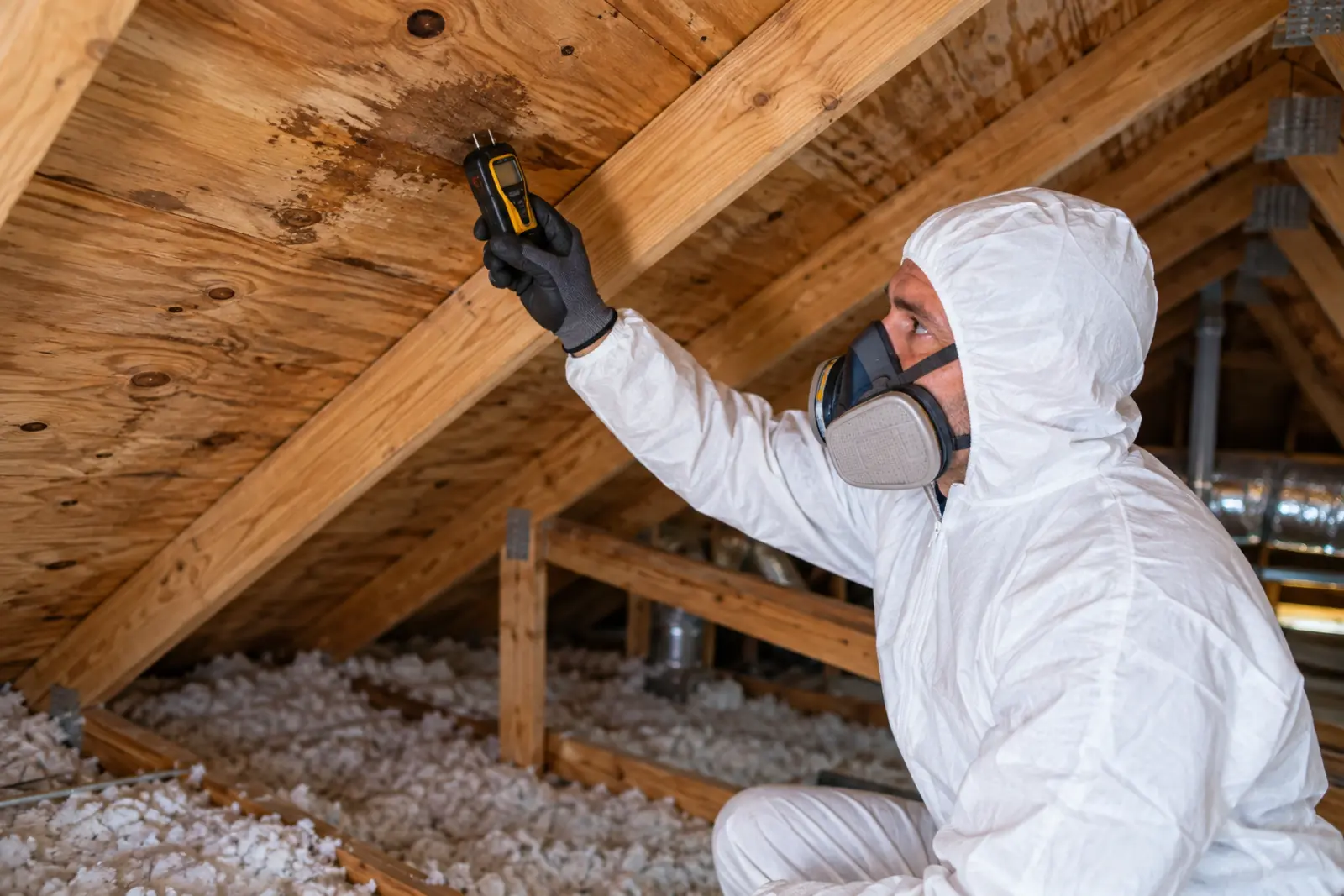
Attic Mold Signs and What They May Mean
These signs help narrow down the likely moisture source. A visual inspection and moisture readings are still needed before deciding what work is appropriate.
| What you notice | Possible cause | What an inspection checks |
|---|---|---|
| Dark spotting on roof decking | Roof leak or condensation | Moisture readings, roof penetrations, and stain patterns |
| Rusty nails or damp insulation | Trapped humid air or a slow leak | Soffit and ridge vents, bath-fan exhausts, and insulation |
| Musty odor near the ceiling | Damp insulation or hidden attic growth | Air leaks, ceiling penetrations, and affected materials |
| Growth returns after cleaning | The moisture source was not corrected | Roof condition, ventilation, and indoor humidity |
Related Mold Removal Services
- AC and HVAC mold removal
- Crawl space mold removal
- Historic home mold removal
- Types of mold found in Gainesville homes