
AC & HVAC Mold Removal Gainesville, FL
Curious why Florida AC systems are so prone to this? See our guide on mold in AC units and ductwork in Florida homes.
How much does AC and HVAC mold removal cost?
It depends on how far the contamination has travelled — the air handler and coil alone is one job, the full duct run is another. Because the system distributes spores, catching it early is usually the difference. The inspection is free and priced before work begins.
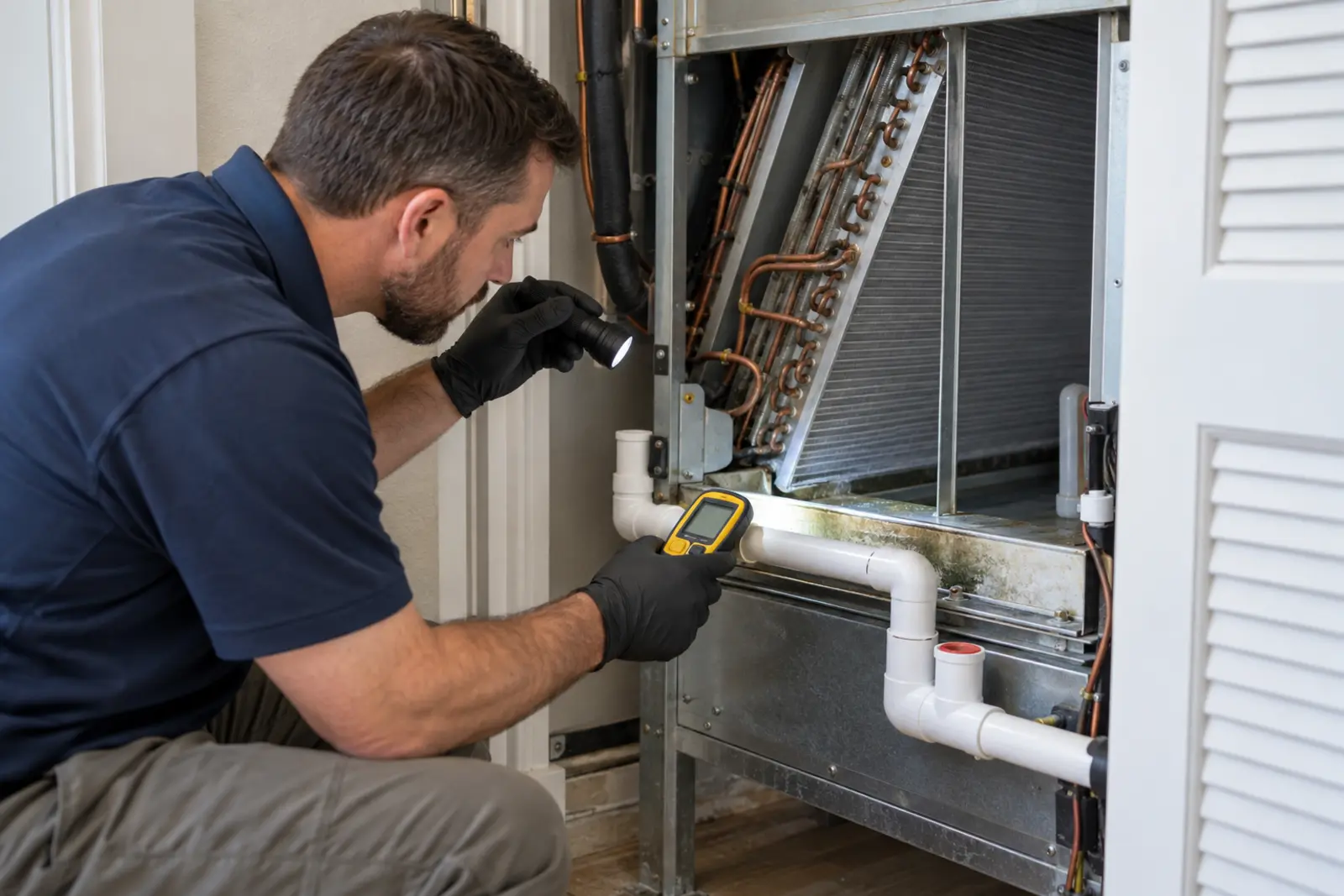
Where HVAC Mold Problems Usually Start
A musty smell at the vents does not automatically mean every duct needs replacement. The location of moisture helps determine the right next step.
| Area checked | Common warning sign | What may be needed |
|---|---|---|
| Evaporator coil and drain pan | Standing water, buildup, or recurring odor | Cleaning plus correction of drainage or airflow |
| Condensate line | Overflow, staining, or a clogged drain | Clear the line and confirm proper slope and flow |
| Supply plenum and nearby ducts | Visible growth or odor when the AC runs | Moisture-source correction and targeted remediation |
| Closet or ceiling around the unit | Damp drywall or discoloration | Moisture mapping to check for hidden spread |
Your air conditioner is supposed to be the thing keeping mold out of your Gainesville home — but a struggling AC system is actually the single most common hidden cause of mold we find in local houses. When a unit short-cycles, has a clogged condensate drain, or is simply undersized for the home, it fails to pull enough humidity out of the air, and mold gets the moisture it needs without you ever seeing a leak. Left untreated, that trapped moisture becomes the moisture source behind recurring mold growth, mildew odor, and indoor air quality problems throughout the home.
Why AC Systems Are Gainesville’s #1 Hidden Mold Cause
Florida homes rely almost entirely on air conditioning to keep indoor humidity below the roughly 60% threshold where mold spores start actively growing. An AC that’s oversized will cool the air quickly without running long enough to dehumidify it properly; one that’s undersized runs constantly but still can’t keep up. Add a slow condensate drain leak — often hidden in a closet or attic — and you have ongoing moisture with no visible sign until the smell shows up.
What AC & HVAC Mold Removal Involves
- Inspection of the air handler, ductwork, condensate line, and drain pan for active growth
- HEPA-filtered containment so spores aren’t pushed through the ducts into the rest of the home during removal
- Removal and antimicrobial treatment of contaminated components
- Coordination with an HVAC technician if the underlying mechanical issue (drain, sizing, short-cycling) needs to be fixed
- Post-removal air quality verification
Signs Your AC Is Causing a Mold Problem
A musty smell when the AC kicks on; visible dark spotting around vents or the return air grille; unusually high indoor humidity even with the AC running; allergy or sinus symptoms that ease up when you leave the house. Ductwork mold on porous insulation liner can also cause cross-contamination between rooms, so regrowth in the same spot within weeks is a sign the moisture source was never fully addressed.
Frequently Asked Questions
Can mold in the ductwork make the whole house smell musty?
Yes — air moving through contaminated ductwork spreads spores and odor to every room the system serves, which is why AC-related mold often smells worse throughout the house than a localized leak would.
Do I need to replace my AC system?
Not usually — most cases are fixed by treating the contaminated components and correcting the underlying moisture issue, not full system replacement.
How much does AC and HVAC mold removal cost?
It depends on how far the contamination has travelled — the air handler and coil alone is one job, the full duct run is another. Because the system distributes spores, catching it early is usually the difference. The inspection is free and priced before work begins.
Why does my new AC system have mold?
Usually sizing. A unit that’s oversized for the square footage cools quickly and shuts off before it has run long enough to pull humidity out of the air — the house reaches temperature and stays damp. Add a condensate drain that backs up and you have mold in a system barely out of warranty.
Should I have my ducts cleaned every year?
Routine annual duct cleaning usually isn’t necessary without an actual problem. What matters is whether there’s a moisture source: a sweating plenum, a blocked condensate line, or an evaporator coil staying wet. Correct that and the ducts largely look after themselves.
Can I run the AC while the work is happening?
Generally not during the remediation itself, because running the system is exactly what spreads spores through the ductwork. We plan around Florida heat rather than ignore it, and getting the system back online is part of the schedule, not an afterthought.
Related Mold Removal Services
- Attic mold removal
- Crawl space mold removal
- Mold testing and inspection in Gainesville, FL
- Types of mold found in Gainesville homes
We Also Serve These Gainesville-Area Neighborhoods
To discuss your property and arrange an inspection, call (386) 378-7980.